Be yourself; Everyone else is already taken.
— Oscar Wilde.
This is the first post on my new blog. I’m just getting this new blog going, so stay tuned for more. Subscribe below to get notified when I post new updates.
Be yourself; Everyone else is already taken.
— Oscar Wilde.
This is the first post on my new blog. I’m just getting this new blog going, so stay tuned for more. Subscribe below to get notified when I post new updates.
Reference List
[Accessed 29 Sep. 2019].
2. Cs.stanford.edu. (2019). The Digital Divide. [online] Available at: https://cs.stanford.edu/people/eroberts/cs181/projects/digital-divide/start.html
[Accessed 29 Sep. 2019].
3. Digital Citizenship. (2019). Digital Access. [online] Available at: http://laurabiancoedtech.weebly.com/digital-access.html#targetText=Digital%20access%20is%20the%20ability,that%20allow%20for%20full%20participation.
[Accessed 28 Sep. 2019].
4. Digital Responsibility. (2019). Digital Divide: The Technology Gap between the Rich and Poor — Digital Responsibility. [online] Available at: http://www.digitalresponsibility.org/digital-divide-the-technology-gap-between-rich-and-poor
[Accessed 30 Sep. 2019].
Sites.google.com. (2019). Digital Access and Assistive Technology – Digital Citizenship D.Ferris.
[online]
Available at: https://sites.google.com/site/digitalcitizenshipdferris/Digital-Access
[Accessed 28 Sep. 2019].
5. HuffPost., (2019). [Blog] Available at: https://www.huffingtonpost.ca/lisa-ostrikoff/digital-reputation_b_3325957.html
[Accessed 30 Sep. 2019].
6.Itu.int. (2019). UNIVERSAL ACCESS.
[online]
[Accessed 29 Sep. 2019]
7.MarketBusiness, (2019). [image] Available at: https://marketbusinessnews.com/financial-glossary/social-capital/
[Accessed 29 Sep. 2019].
8.Mulama, J. 2004. Technology: rural Africa yearning for Internet connectivity. [Online]. Available WWW: URL: http://www.ispnews.net/interna.asp?idnews=24742
(Accessed 28 Sep.2019).
9.Reid-Smith, E. (2018). Australian Libraries: The Digital Economy Within Everyone’s Reach. Journal of the Australian Library and Information Association, 67(2), pp.177-178.
10.Rouse.M, (2019). [Blog] Available at: https://whatis.techtarget.com/definition/digital-divide
[Accessed 28 Sep. 2019].
11. Sites.google.com. (2019). Q.1.3 This is how a digital citizen can build and enhance social capital. – Digitalcitizenshipthulani. [online] Available at: https://sites.google.com/site/digitalcitizenshipthulani/this-is-how-a-digital-citizen-can-build-and-enhance-social-capital
[Accessed 29 Sep. 2019]
12. Technologyforhumanity.org. (2019). Content and the Digital Divide: What Do People Want? | Technology for Humanity. [online] Available at: http://www.technologyforhumanity.org/articles/contentanddd.html
[Accessed 28 Sep. 2019].
13. Teach Thought Staff, (2019). [image] Available at: https://www.teachthought.com/wp-content/uploads/2014/03/tips-manage-digital-footprint.png
[Accessed 30 Sep. 2019].
14. Thesaurus, (2019).
[online]
Available at: https://www.dictionary.com/browse/digital-footprint
[Accessed 30 Sep. 2019].
15. The Economic Times. (2019). What is Social Capital? Definition of Social Capital, Social Capital Meaning – The Economic Times. [online] Available at: https://economictimes.indiatimes.com/definition/social-capital
[Accessed 29 Sep. 2019]
Social Capital & Training,2014.
Question 2.2
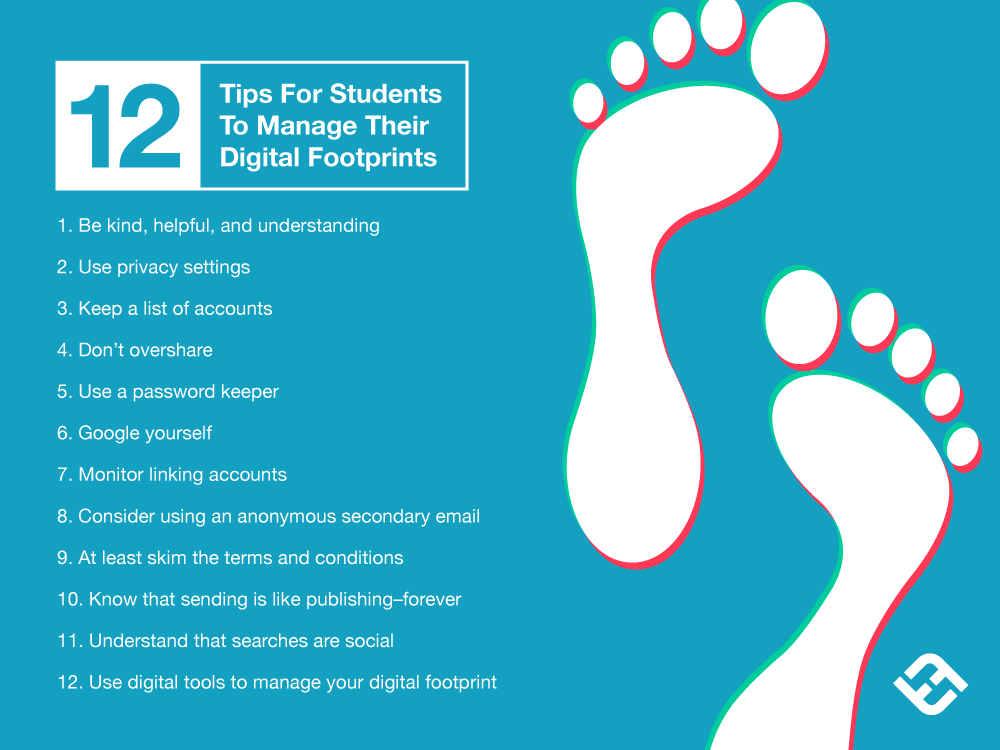
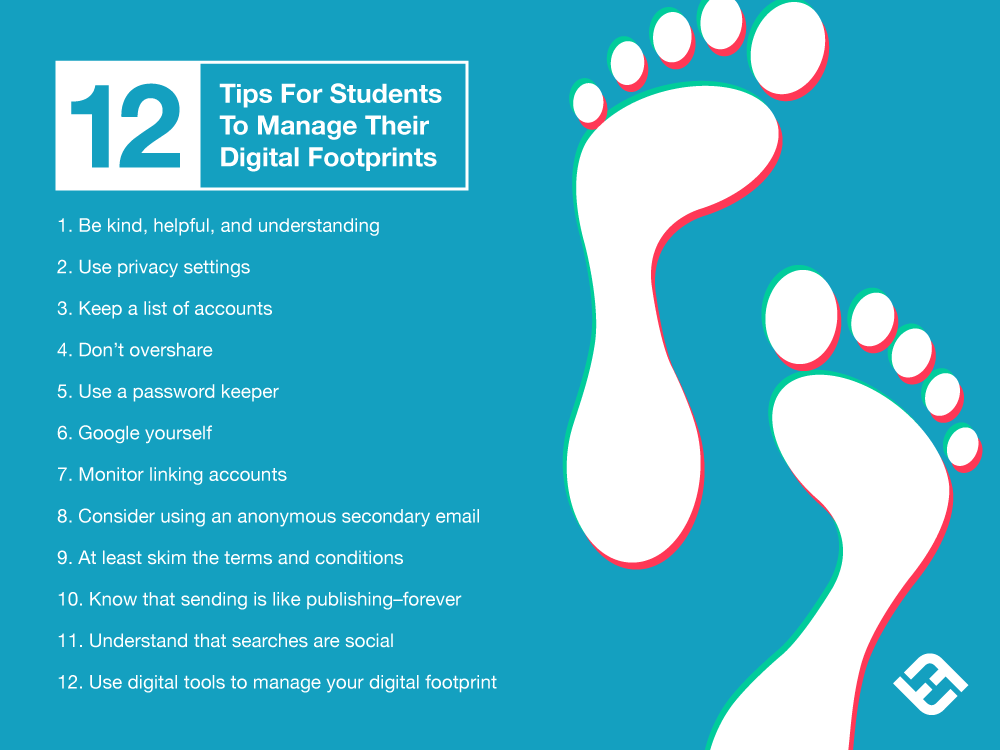
A Digital Footprint is described as the “footprint” or the trail that one leaves online via using emails, uploading videos, and other forms of online information. A Digital Footprint can further be explained as “one’s unique set of digital activities, actions, and communications that leave a data trace on the Internet or on a computer or other digital device and can identify the particular user or device” (Thesaurus, 2019). Thousands of people use the internet for various reasons whether to inform or to learn about something however, misuse of the internet can have a negative effect on your digital footprint as an individual .What you share such as pictures, check -ins and reposts can be harmful to others and one’s future. (Ostrikoff.L,2019), states that every picture, status or post and every update one shares is permanently announcing who one is to the world. Further, a digital footprint may be problematic as companies use search engines and social media to find information about a person who has submitted their resume for a job. Companies use applicant’s footprint to see whether the candidate is fit enough for the job. Businesses often use digital footprints to validate resumes and if one has a bad digital footprint, this may influence their future (Ostrikoff. L,2019). Often the things posted on social media could be mistakenly misread leading to false perceptions about people and also leading to one’s opportunities being limited because of their online presence. In order for one’s online presence to be “good” is for an individual to watch what they post, share and update online.
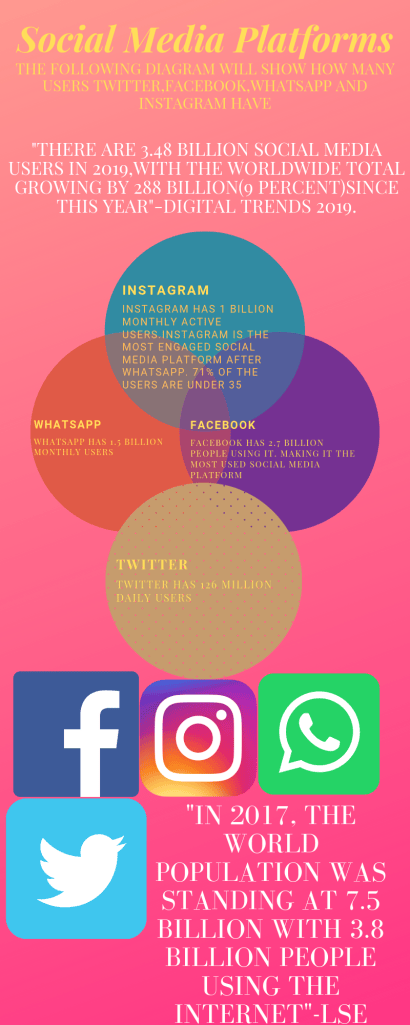
Info-graph showing statistics of social platforms
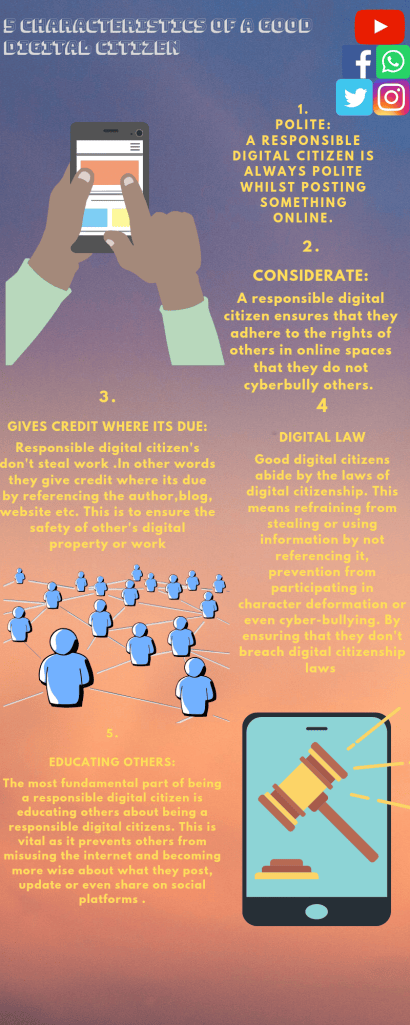
INTRODUCTION-Task 1 will be discussing, elaborating and illustration the nine elements of digital citizenship. It will look further into explaining how an individual’s digital footprint has an impact or how it may become a problem. Furthermore, this task will also elaborate on the importance of social capitalism and how to build social capitalism. Lastly, the task will explain further the five characteristics of being a good digital citizen in a form of an info-graph and another info-graph will be depicting social media user statistics .
Question 1.1
There are nine elements that make up digital citizenship. These nine elements also show the surrounding issues that are associated with digital citizenship which include: the use, abuse and misuse of technology. The nine elements of digital citizenship are:
Digital Access– is described as “the ability to fully participate in digital society. This includes access to tools and technologies, such as the Internet and computers, that allow for full participation” (Digital Citizenship, 2019). Digital citizenship also means the equal distribution of technological resources also fair accessibility to technology which will allow the ability for learning to be enhanced (Sites.google.com,2019). There is often a digital divide that occurs and (Rouse. M, 2019) states that digital divide is also the gap that exists within the access of information and communication technology in demographics and regions that have access to information and communication technology to those that don’t or have restricted access. Digital divide can be evidently seen between the technology access of those who live in the urban areas and those who are situated in the rural areas. Most times there is limited access of any technology in rural areas due to lack of technological infrastructure or enough resources. A digital divide can also be seen between/within different socioeconomic groups called a Socio-Economic Divide, Digital Divide in infrastructure, A digital divide in Content, A digital Divide in Gender divide, A digital divide in Skills and digital divide in the Universal Access
Socio-Economic Divide- This digital divide describes the different levels of access to internet or technological information in developed and developing countries. In most cases developed countries have more or better internet access due to the infrastructure which allows for the fair accessibility. Whilst those situated in developing countries often have restricted access or no access at all an example would be in a community with access to the internet but have computers that perform poorly or even have lower performance compared to other computers, the wireless connections are slow or have lower speed or even restricted access to subscription based content (M,Rouse.2019)
Digital Divide in infrastructure- This is also seen in developed and developing countries where infrastructure has caused a digital divide. When a digital divide in infrastructure occurs this usually means “a lack of access to network connections, to devices, and to software and applications”(Digital Responsibility, 2019) .Infrastructure divide also means that there are gaps occurring in high access of internet this further affects the access of media or even simply streaming a video on the internet. (Digital Responsibility, 2019) states that “Recent data show that only 49% of African Americans and 51% of Hispanics have high-speed internet at home, as compared to 66% of Caucasians”. Infrastructural division may also mean the lack of affordability in network services, applications and devices. Furthermore, Mulama (2004) argues “that the communication infrastructure in Africa is concentrated in urban areas as 50% of telephone lines are found in the capital cities where only about 10% of Africa’s population resides”
Divide in Content- A divide in Content can be a factor in Digital divide. There are barriers which lead to content being restricted or even divided such barriers include: The lack of local information or the gap in local information- most content division can be caused by the lack of information about their community (Technologyforhumanity.org, 2019).
The Digital Divide-a Gender Divide- The Digital Divide that occurs in digital citizenship affects females the most. In developing countries factors such as socio-cultural factors, lack of access, etc. There have been debates about what gender is affected more by digital divide however, research has shown that women lag behind men in the ownership of computers, usage of the internet and the development of technological skills (Reid-Smith, 2018). According to (IIE,2019), “The statistics show that, on average, women are online in developing countries 23% less than that of their male counterparts”.
The digital divide – In Skills – There is a lack of education in computer literacy/digital literacy resulting in a division in skills. It is not only the accessibility of the internet but also the skills that go with being a digital citizen and using a computer.
The digital divide -Universal Access – The Universal access is described as the means “that everyone in a population hasaccess to publicly available communication network facilities and services. Typically, it is provided through such means as pay telephones, community telecentres and community Internet access terminals” (Itu.int, 2019). The necessity for computers is increasing as more people have access to the internet and the usage of computers. The public sector’s responsibility is to take notice of the increasing numbers in digital usage and ensure that everyone has access to it. Furthermore, (Cs.stanford.edu, 2019) suggests that “the government should subsidize Internet access for low-income households. At the same time, the private sector must commit to providing equal service and networks to rural and underserved communities so that all individuals can participate”.
Q.1.2) Social capital is defined as the personal relationship within an organisation or company that acts as a helping tool to build trust and respect among the employees of the company. As trust is built and respect, the company’s performance is enhanced. Social Capital can also be described as “in financial terms, social capital basically comprises the value of social relationships and networks that complement the economic capital for economic growth of an organization” (The Economic Times, 2019).Social Capital is fundamental as it is considered to bring sociological concepts together such as social cohesion and integration . There are several ways in which a digital citizen can enhance and build social capital, and these include:
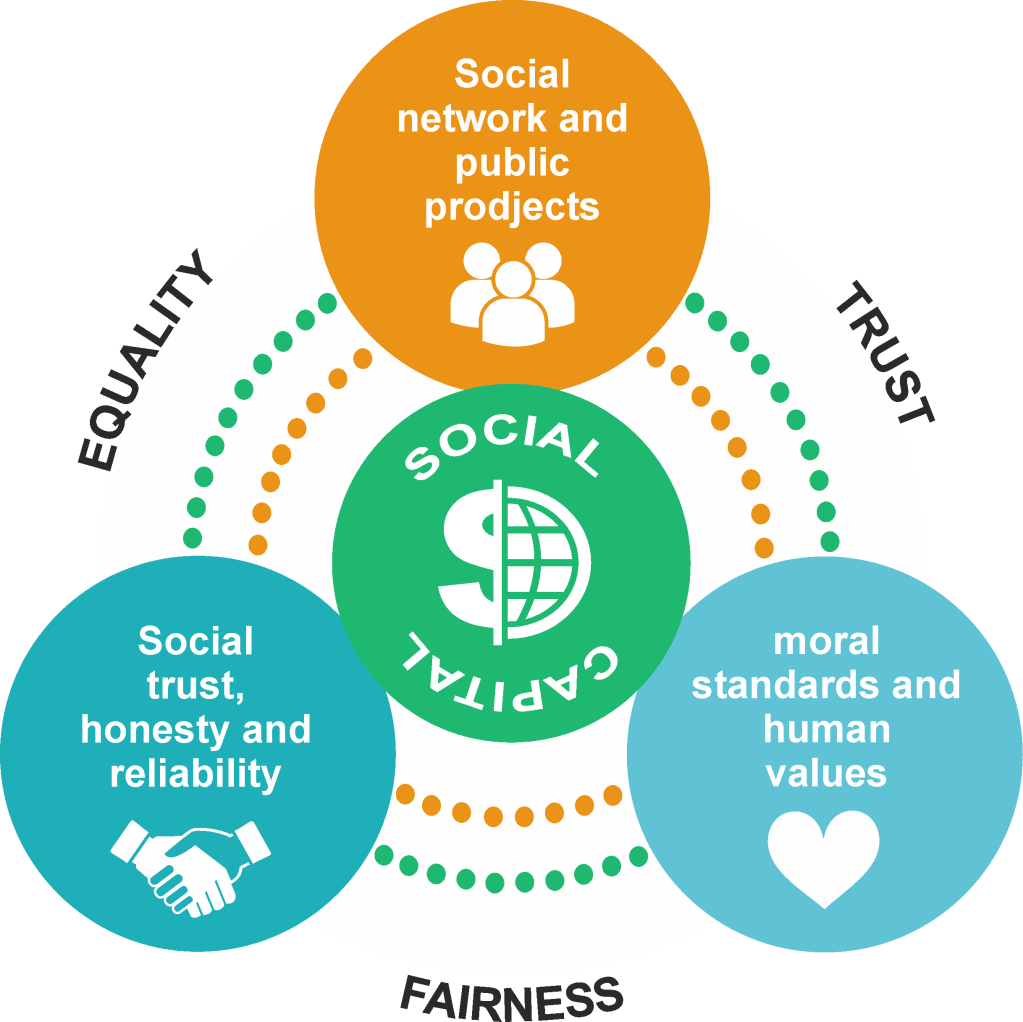
(Balanced Achievement,2019)
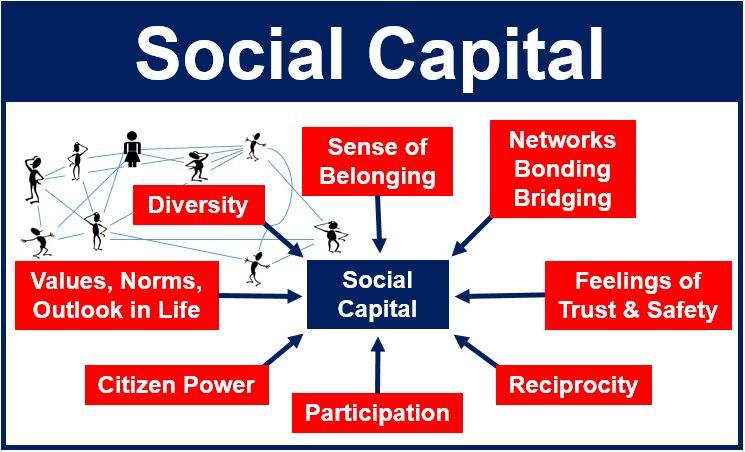
The following pictures depicted above, show the different characteristics of how a digital citizen can enhance social capital.
1.3) https://wordpress.com/block-editor/post/19003383digc.school.blog/45
DIGITAL CITIZENSHIP-MEDIA FLUENCIES
“MediaFluency refers to the ability to unconsciously interpret the messages contained within media of all sorts, and the ability to communicate in multiple multimedia formats” (Hubspot,2019). Media Fluency is divided into two which include: Interpretation(listening) of the media and Output (communication).
The video that I will be using is the event where Jamaica Break Men’s 4x100m World Record in the London 2012 Olympics.
Interpretation (Listening):
Link to the video- https://www.youtube.com/watch?v=uwLDpcye-VM&t=289s Link to the video-
Digital Divide refers to the gap between those who have internet access and those are hindered from having any sort of internet access. A Digital Divide occurs in three ways which include :
Socio-economic divide- this between developed countries and developing countries
Infrastructure Divide- an example of digital divide in infrastructure is electricity
Digital Divide in content- these are hindering factors in content an example unavailable video on YouTube.
Birdhaven is a suburb in the North of Johannesburg and is adjacent to one other suburb being Melrose . Birdhaven doesn’t show much Digital Divide as in many homes around the area, the internet is available. Most Houses here have uncapped WiFi meaning that majority of the residents here have access to the internet. However, a digital divide may be evident if some residents who live here don’t have cellphones that allow them to access the internet . Although , internet access is vastly accessible an infrastructure divide is evident. The area often experiences electricity blackouts now and again causing a divide in infrastructure however, this is not a frequent thing to happen.
19003383- This is going to be an educational blog by Lisa Nontebeko
This is an example post, originally published as part of Blogging University. Enroll in one of our ten programs, and start your blog right.
You’re going to publish a post today. Don’t worry about how your blog looks. Don’t worry if you haven’t given it a name yet, or you’re feeling overwhelmed. Just click the “New Post” button, and tell us why you’re here.
Why do this?
The post can be short or long, a personal intro to your life or a bloggy mission statement, a manifesto for the future or a simple outline of your the types of things you hope to publish.
To help you get started, here are a few questions:
You’re not locked into any of this; one of the wonderful things about blogs is how they constantly evolve as we learn, grow, and interact with one another — but it’s good to know where and why you started, and articulating your goals may just give you a few other post ideas.
Can’t think how to get started? Just write the first thing that pops into your head. Anne Lamott, author of a book on writing we love, says that you need to give yourself permission to write a “crappy first draft”. Anne makes a great point — just start writing, and worry about editing it later.
When you’re ready to publish, give your post three to five tags that describe your blog’s focus — writing, photography, fiction, parenting, food, cars, movies, sports, whatever. These tags will help others who care about your topics find you in the Reader. Make sure one of the tags is “zerotohero,” so other new bloggers can find you, too.
Have a WordPress.com account? Log in now.